
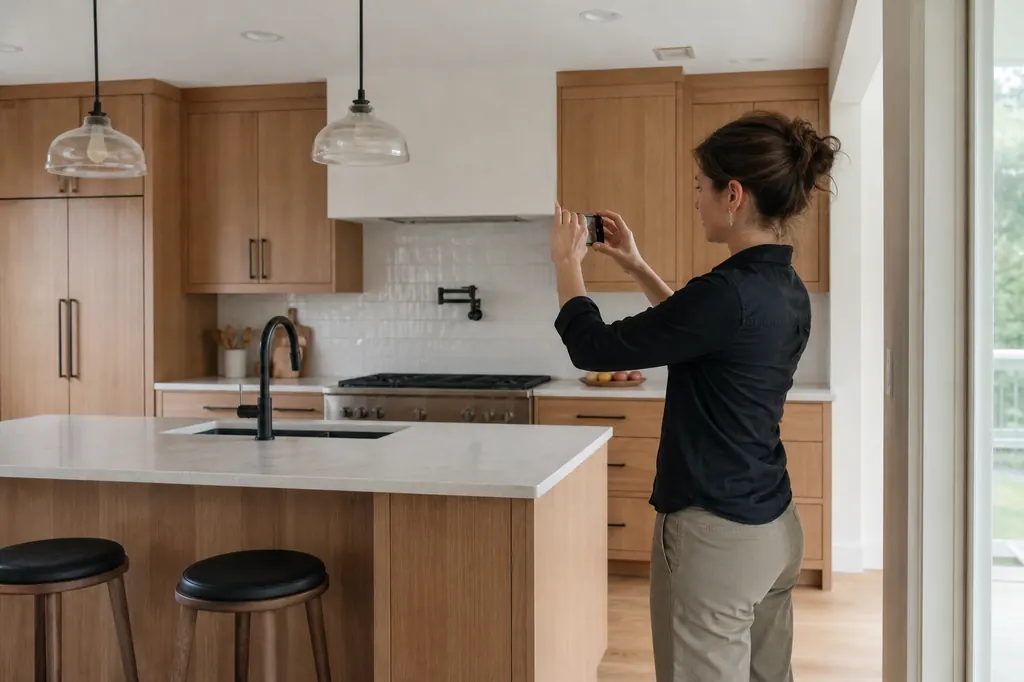
Facebook remodeling leads can stall at the offer, the creative, the form, the destination, the first follow-up or qualification. Find the stage by reading the last batch of leads one at a time. Can you reach them, do they want this project in your area, and did anyone offer a clear design appointment? Change that stage before you replace the whole campaign.
Why Facebook works differently for remodelers
Google catches people who are already searching. Facebook and Instagram reach people before they search, while they're scrolling at night and thinking their kitchen looks tired or their bathroom needs work. For a remodeler, that can mean meeting a project while it's still an idea.
Kitchen and bath remodels are big, considered purchases. Homeowners look at photos for months, save ideas, talk it over, and get several quotes. Facebook and Instagram fit that slow, visual decision well, if the ads show real work and the follow-up is patient. They fit badly when they're treated like emergency plumbing ads that expect a booked job from one click.
Where does the design appointment fall through?
Put recent leads in a sheet with the date, ad, project, town, every contact attempt, the appointment offered, any proposal and the outcome. Let the newer ones age before you call them lost. A bathroom for next spring can be a good lead with no appointment yet.
| Stage | What the records show | What to test first |
|---|---|---|
| Offer | People expected a free design or a quote by phone | Say what the visit is, who should attend and any fee you charge |
| Creative | People wanting a vanity swap answer an ad for whole baths | Show and name the scope you want |
| Form | Wrong numbers, or people who don't remember asking | Make details deliberate and confirmable |
| Destination | Site visits with no form or call | Test the page and form on a phone, starting from the ad |
| Follow-up | Real projects with a late call or only one attempt | Name an owner and a backup |
| Qualification | Reachable people outside your scope, towns or timing | Ask about those earlier, then decline kindly |
Two people might ask about an accessible bath in Morristown on the same day. The first owns the house and wants to start in spring. The second is a daughter asking for her father, who hasn't agreed to anything. Neither is junk. The first may be ready for a visit. The second needs a conversation about who decides, covered in marketing to homeowners and adult children. A town name tells you nothing about either family's budget.
Show your own work, and show yourself
Start with the pictures. Stock photos of perfect white kitchens look like every other ad and tell the homeowner nothing about you.
Even simple phone photos and video can work, as long as they're well lit and clearly your own jobs.
- Real finished projects: photos of kitchens and baths you actually built, ideally with before and after shots from the same angle.
- Short walkthrough videos: a slow pan across a finished kitchen, or a quick look at the details that took real skill.
- You and your crew: homeowners are letting you into their house for weeks. A short video of the owner explaining how a project works can build trust.
- Process, not only results: what happens at the design visit, how you protect the rest of the house, how long the work takes.
- Customer stories: with permission, a real homeowner talking about their project can say more than a headline.
Who to reach
Start with geography. If the ad doesn't promote financing, you can target the towns you want to work in and leave out places you'd never drive to. In Morris and Sussex County that might mean the towns where your crew already works and where your own job records show projects that fit. Location is not exact, so still ask for the town.
Since January 21, 2025, Meta has required a special ad category for US ads that promote financing or 0% installment payments. That category limits age targeting, blocks ZIP codes and location exclusions, and widens city or pin areas, which matters if you planned to aim accessible-bath ads at older homeowners. Ordinary remodeling isn't among Meta's housing category examples.
Meta began combining some detailed interest options in June 2025 and treats the ones you pick as suggestions by default, so it can show the ad beyond them. Make the ad itself clear about who it's for. If you want full kitchen remodels, show one and say so.
Your own audiences are worth a look. You can show ads to people who visited your website (with the Meta pixel installed), people who engaged with your page or videos, and, following Meta's rules for customer lists, past customers who might want another room done. Those audiences already know your name, so they're worth a separate test if there are enough people in them.
Keep your budget focused rather than spread thin. A smaller area with ads that run steadily for a few months can teach you more than a big area with ads that change every week. Give each test enough time to bring in real leads before you judge it, and decide up front what a qualified lead looks like: the towns, project types and timelines that suit your crew.
Lead forms or landing pages?
Meta lets you collect leads two ways. With instant forms, the homeowner fills out a form without leaving Facebook or Instagram. With a landing page, they click through to your website.
Instant forms are quick to submit, which can also mean little thought went in. Try a few real questions, like the town, the room and the timeline. Meta's higher intent option adds a review screen before submitting. It's delivered only to the Facebook and Instagram mobile feeds, and it doesn't promise better leads.
A landing page gives you room for project photos, your process and what a design visit involves. It also adds a click and can fail on a slow phone. Neither route always wins. Compare them over the same period, with the same offer, by qualified appointments and later proposals, allowing for the time remodels take to sign.
Follow up like a remodeler, not a call center
A remodel lead is the start of a conversation that may last months. Calling once, leaving a voicemail and moving on wastes the money that brought the lead in. Our sales growth support looks at this stretch between inquiry and signed project.
We set up follow-up sequences like these as part of our AI automations work, so leads hear back even when you're on a job site all week.
- Respond fast. Call, or text if they agreed to texts, soon after the lead comes in, while the homeowner still remembers your ad.
- Follow up more than once, with permission. A few friendly, personal attempts over the first week or two can catch people who were busy. Use the channels they agreed to, and stop when someone asks.
- Stay in touch after the estimate. Homeowners often take weeks to decide. A short check-in, a photo of a similar finished project, or an answer to a common question keeps you in the running.
- Track every step. Leads, design visits booked, proposals sent and projects signed. That's how you judge whether the ads are paying off. Ask how people found you, too, because someone who saw your ad may call weeks later from a Google search.
A phone number on a lead form isn't blanket permission for marketing. Meta makes any needed consent your job. New Jersey bars unsolicited advertising texts without permission that includes the number (N.J.S.A. 2A:65D-3). Wireless industry guidelines, which aren't law, expect a written opt-in for promotional texts. Marketing email needs an opt-out, honored within 10 business days, and your postal address. This is general information, not legal advice.
What to skip
A few habits can waste a remodeler's money on Facebook: boosting random posts with no clear goal, using cheap-sounding offers that attract bargain hunters instead of serious homeowners, running the same tired photo for months, and judging ads by likes and comments instead of booked design visits. If your ads talk about price first, you may get leads who care about price first.
It also helps to know what kind of remodel you want more of. Full kitchens, primary bathrooms, and accessible baths with walk-in showers each draw different homeowners. If accessible bathrooms are part of your work, we cover that audience on the aging-in-place marketing page.
What to settle before you launch
Have the Page and ad account under your business's control, photos you have permission to use, one offer and one person who owns new leads. Test the form and follow the test all the way to that person's phone. Decide where leads are stored, because Meta only keeps instant-form leads downloadable for 90 days. Check who can download them as well.
Read the form slowly before publishing. You need a privacy policy link, and a published instant form can't be edited. Contact details may be prefilled from a profile, which is one ordinary reason a number is old. Optional phone verification can help confirm a mobile number and may be switched on by default. Someone who enters a landline can't pass it or submit. That could turn away the older homeowner you were hoping to reach.
Then leave a test alone long enough to read it. Changes to targeting or creative and pauses of seven days or more restart Meta's learning phase. Meta says learning usually ends after about 50 results in the week after your last significant edit. A small remodeler may never get there. That isn't a reason to buy 50 leads you can't call. Use the Facebook budget test to decide what's affordable, and spend nothing if the design calendar is full.
If you send qualified-lead or appointment events back to Meta, they must happen within 28 days of the lead to be used for that optimization. A signed kitchen often won't, so choose an earlier real step and keep the final outcome in your own records.
For New Jersey, registered home improvement contractors must show their registration number in ads (N.J.S.A. 56:8-144). This is also general information, not legal advice.
Want ads that book design visits?
Request a free 20-minute growth conversation with Pam. Bring a few recent lead examples with personal details removed, your steps from form to appointment and some project photos, and tell us what kind of work you want more of. We'll talk honestly about whether Facebook and Instagram make sense for you right now and what we'd run first. You can also read more on the kitchen and bath remodeler marketing page or the Facebook and Instagram ads page.
Sources
- About instant form types, Meta. Checked November 22, 2026.
- Create a lead ad with instant form from Meta Business Suite, Meta. Checked November 22, 2026.
- Enable the SMS verification feature to help improve lead quality, Meta. Checked November 22, 2026.
- About conversion events for lead ads with instant form, Meta. Checked November 22, 2026.
- About expired leads, Meta. Checked November 22, 2026.
- Download or retrieve your leads data from Meta, Meta. Checked November 22, 2026.
- Lead Ads Terms, Meta. Checked November 22, 2026.
- About the learning phase for ad sets in Meta Ads Manager, Meta. Checked November 22, 2026.
- Significant edits and learning phase, Meta. Checked November 22, 2026.
- Updates to detailed targeting, Meta. Checked November 22, 2026.
- Use detailed targeting, Meta. Checked November 22, 2026.
- About ads for financial products and services, Meta. Checked November 22, 2026.
- About ads for housing, employment or financial products and services, Meta. Checked November 22, 2026.
- About audiences for housing, employment and financial ads, Meta. Checked November 22, 2026.
- Messaging Principles and Best Practices, CTIA. Checked November 22, 2026.
- P.L.2015, c.119: unsolicited advertising by text messaging (N.J.S.A. 2A:65D-1 to 2A:65D-5), New Jersey Legislature. Checked November 22, 2026.
- CAN-SPAM Act: A Compliance Guide for Business, Federal Trade Commission. Checked November 22, 2026.
- P.L.2004, c.16: home improvement contractor registration, New Jersey Legislature. Checked November 22, 2026.