
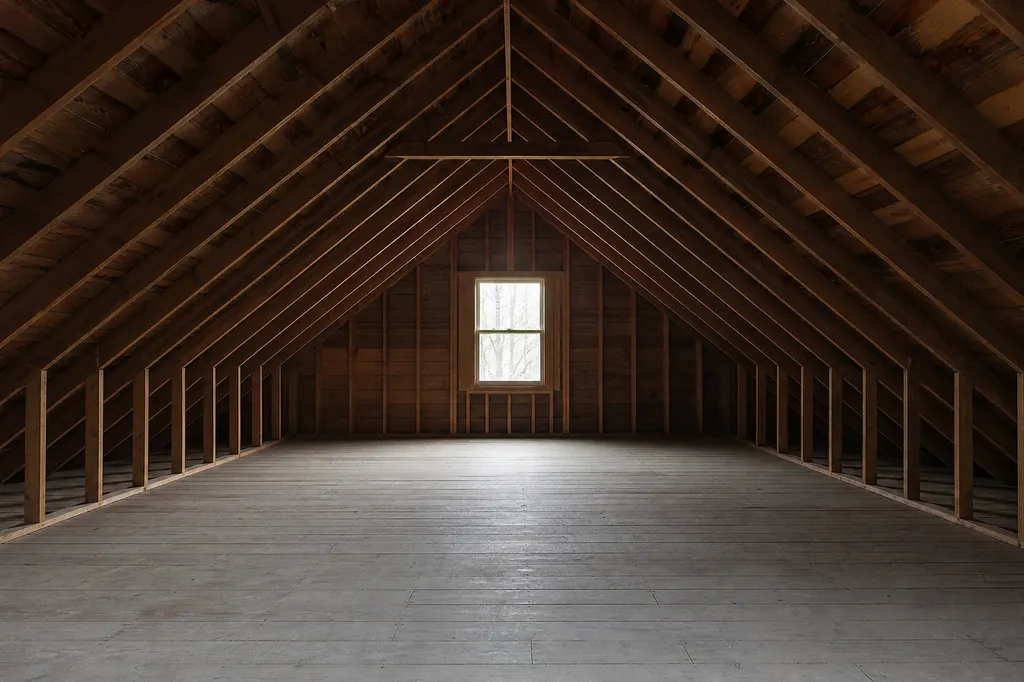
Photo: illustrative image created with AI.
Photograph the work before it disappears, label what each picture shows and explain it the way your installer would at the kitchen table. Homeowners can judge a sealed gap, a measured depth or a protected hallway. They can't judge next winter's bill from your photo, and you can't promise it. Show what was done, then answer the questions that come before an estimate.
The camera has a deadline on an insulation job
A remodeler can often come back next week for the finished picture. Once your drywall is closed or the attic is covered, the careful part of the job is out of sight. The shot list has to ride with the crew and be short enough to follow with dusty gloves.
- The starting condition, from a spot you can stand in again
- How the house and belongings were protected
- The detail that will soon be hidden
- The material in place, with your installer's measurement readable where one was taken
- The same first view, finished
- The space cleaned up and the access closed
The second and last pictures are easy to skip, and they may be the most persuasive. A homeowner deciding whether to let four people haul a hose through the upstairs hall cares what that hall looks like at five o'clock. Show the runner, the covered doorway and the swept floor.
Nobody should remove protection, step somewhere unsafe or delay the job for content. If a shot can't be taken safely, write down what was done and go without it.
A label turns a grey photo into evidence
To a homeowner, one attic looks much like another. Every picture needs three plain facts: the stage, the place in the house and the thing to look at. Have the installer supply them. Nobody in an office should guess a material or measurement from an image.
A usable caption might read, "Before: the attic floor beside the hatch. The gap along this framing was sealed before new material went in." It doesn't say the house was losing a fortune through that gap. If you give a depth or a test reading, say who measured it, where and at what stage, and keep the job record behind it.
Before and after must be the same project and, as near as you can, the same angle. Don't brighten one and darken the other. Don't use a manufacturer's photo as your own work. If a picture is an illustration, call it one. A dim pair from the real job is more use than a polished one you can't vouch for.
Keep what you did apart from what you expect
An honest caption usually goes wrong in its last clause. The work is true, then someone adds "so their bills will drop." These are different kinds of statement and need different proof.
| Kind of statement | Example wording | What you need first |
|---|---|---|
| Work done | We sealed these openings and insulated this floor | The job record and photo |
| Result measured | This is the reading taken before, and this is the one after | Both readings, the method, who took them and permission to share |
| Result expected | The assessment modeled a possible reduction for this house | The written model, its assumptions and a clear statement that it's an estimate |
Most social posts only need the first row. The second row is strong when you have it. The third is easiest to misread, since a modeled figure for one Randolph colonial will travel to every cape and lake cottage that sees the post. Leave percentage savings out of organic posts and go over the house's own estimate in person.
Comfort needs care as well. "They called about a cold bedroom" is a fact if they did. "That room will never be cold again" is a warranty you didn't mean to write.
Answer the questions that hold up an estimate
Open your inbox and ask the estimator what people wanted to know this month. You'll probably find better subjects there than in a content calendar:
- Do we have to move everything out of the attic?
- Is the old material coming out, and who decides?
- Will you be in the bedrooms, and for how long?
- What does an assessment include, and what does it cost?
- How will I know the hidden part was done?
- Do you sell this alone, or with windows and air sealing?
Let the installer answer one at a time in a short clip or a few written lines, sticking to work you offer. "It depends, and here's what we check" is a respectable answer. Don't turn a post into instructions for doing the job, and send moisture, wiring, possible hazardous material or health questions to the qualified person.
The fifth question deserves a standing answer on your website: what photos or records the customer receives at the end. If you don't give any today, decide that before marketing claims it.
Programs are news, so date them
Rebates and credits are where a useful post goes stale. The status of each program here was checked on November 22, 2026. The federal energy efficient home improvement credit covers improvements only through December 31, 2025, so any old post offering it for new work should come down. New Jersey's federally funded home energy rebates are still in development and not open for applications.
Utility programs are separate. JCP&L lists a whole-home program that uses participating contractors, and New Jersey Natural Gas lists one that requires insulation and seal-up measures. The gas company's offer currently covers installations through June 30, 2027, while funding lasts. Each program has its own territory, eligibility and terms, and modeled savings in a program aren't a promise of savings in a house. Don't headline their biggest dollar figure. Say whether you participate, link the program's page, date the check and let the program confirm who qualifies.
Permission and the small print
An attic is full of private life: boxes with names on them, holiday things, a view out to the street. Ask the homeowner before photographing and again in writing before publishing. Crop out addresses and people, use a town only with their okay and take no for an answer. If they got a discount for a testimonial, it's a connection that can require disclosure, so say so in the post.
Registered home improvement contractors must also show their registration number in advertising, so design it into posts you promote and put it in the profile. Have your adviser confirm how the rule applies to unpaid posts. This is general information, not legal advice.
One job can fill several places
A well-documented attic can become a website project with all six stages, a before-and-after post, one answered question, a Google Business Profile photo and a picture the estimator shows at the next visit. Build the website version first, where it has room for explanation and can be found again. Social posts scroll away. Our post ideas for contractors cover the wider mix, and if you're paying someone to run it, read what a monthly social media service should include.
Judge the material by what happens at intake and at estimates. Did anyone mention a post, ask a better question or recognize the process? Count qualified inquiries and signed jobs where you can, and accept that much of this influence won't be traceable. If quotes are stalling over something else, such as scope or a missed call-back, fix estimate follow-up before making more content. If you need jobs next week, organic posting is the wrong first purchase.
Our social media service works from your real project material, and the window, door and insulation marketing page covers the channels around it. To talk it through, request a free 20-minute growth conversation and bring one job's photos, the installer's explanation and the questions you get before estimates.
Sources
- Energy Efficient Home Improvement Credit, Internal Revenue Service. Checked November 22, 2026.
- Inflation Reduction Act Home Energy Rebates in New Jersey, New Jersey Clean Energy Program / BPU. Checked November 22, 2026.
- JCP&L Whole Home Energy Solutions, JCP&L / CLEAResult. Checked November 22, 2026.
- Whole Home Energy Solutions for Residential Customers, New Jersey Natural Gas. Checked November 22, 2026.
- Home Improvement Contractor Businesses FAQ, Question 26, New Jersey Division of Consumer Affairs. Checked November 22, 2026.
- 16 CFR 255.5 Disclosure of material connections, Electronic Code of Federal Regulations / FTC. Checked November 22, 2026.